Rumba
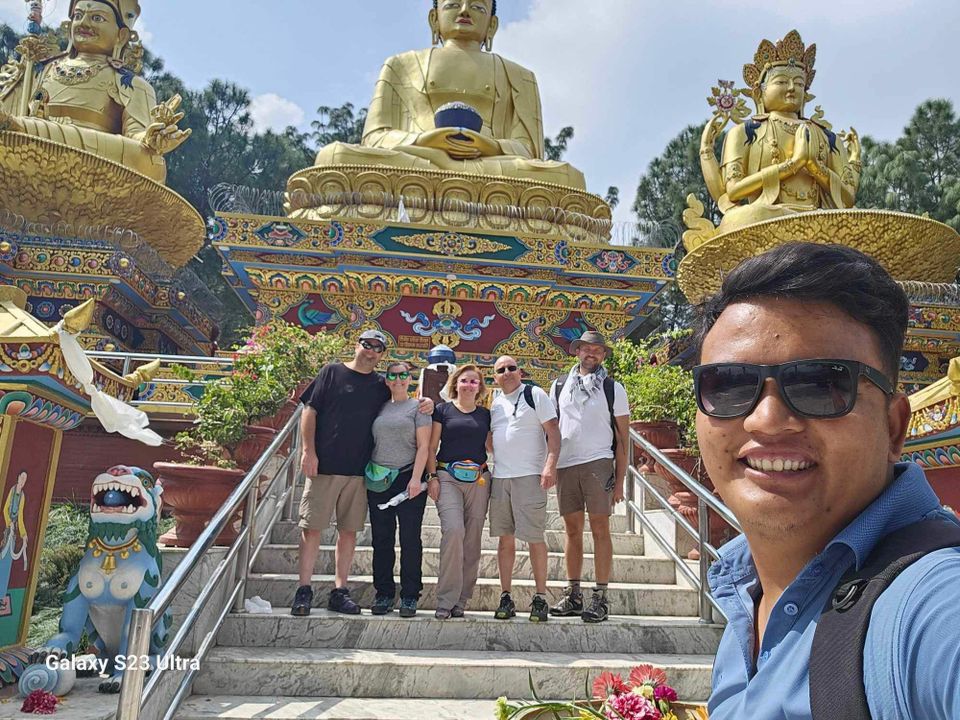
When we arrived in Nepal for our Annapurna Circuit trek, Bryan and I were the first of our group to arrive. We settled into our hotel, made arrangements with the trekking company owner to exchange some currency, and wandered out into Kathmandu to explore a little on our own while we waited for the others.
Once everyone had arrived, we met our guide.
Rumba.
My first impression was of a young Nepali man, seemingly in his late twenties, with infectious energy and a smile that rarely seemed to leave his face.
I will admit something now that makes me smile in hindsight: we wondered whether someone so young could possibly have the experience necessary to lead us on this once-in-a-lifetime journey through the Himalayas and over Thorong La.
It wouldn’t take long for us to get our answer.
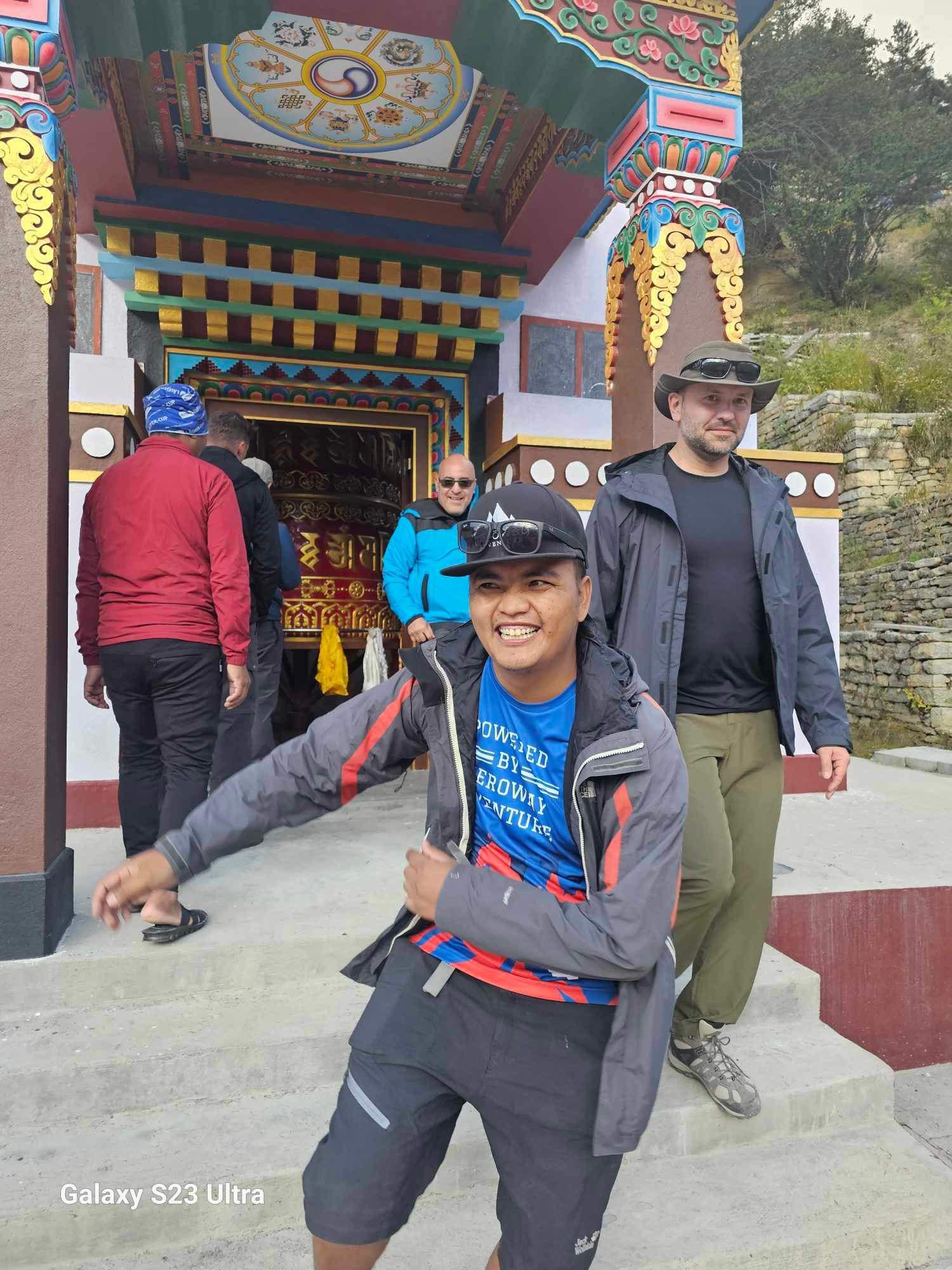
Almost immediately, Rumba gathered us together and announced that we were going to walk from our hotel to Swayambhunath, the Monkey Temple. It would be our first real glimpse of Nepal.
We walked about two miles through Kathmandu before arriving at the bottom of the famous staircase: 365 stone steps leading to the temple above.
So we climbed.
What we didn’t realize at the time was that this wasn’t simply sightseeing.
It was our first test.
Rumba was watching us.
He was learning our endurance, our pace, our physical abilities and probably something about our mental ones as well. Throughout the Annapurna Circuit, he would continue doing this, quietly observing each of us and adjusting the pace necessary to move our group safely through the mountains.
The young guide we had initially wondered about was already several steps ahead of us.
Over the days that followed, we began getting to know the person behind that ever-present smile.
Rumba loved American music. On the jeep ride toward Besisahar at the beginning of our journey, he played American songs from his phone while we laughed and sang along. He seemed so young, so full of life, and genuinely happy.
Then there were the evenings.
After dinner, Rumba would sit with us. We invited him more than once to eat with us, but he would smile and politely decline. Instead, after we had eaten, he would join us and tell us stories.
I remember them almost like bedtime stories.
After another long day of walking through the Himalayas, we’d sit listening as Rumba told us stories of the Buddha, each carrying a lesson or some small piece of wisdom.
Those evenings became part of the rhythm of the trek.
And Rumba noticed things about people.
One night, long after most of the trekkers had gone to bed, there was a knock at our door.
It was Rumba.
He wanted me to come upstairs to the rooftop.
Rumba was a photographer, and he knew that I loved photography too. That night he was trying to photograph a Himalayan sky filled with more stars than I could possibly describe. He knew I would want to see it.
Eventually the rest of our group came up too, and we stood together beneath that incredible night sky. Rumba and I talked about photography and my plans to try some time-lapse photography during the trek.
Somewhere in the midst of all this, someone apparently stole Rumba’s pants from the area where the guides and porters were staying.
He wasn’t even angry.
He laughed.
That was Rumba.
Another day, as we passed through a village, he suddenly pulled Bryan and me toward a tiny open doorway. Inside, women were making a drink from Himalayan sea buckthorn. He wanted us to try it.
We did.
It was wonderful.
He watched our faces to make sure we genuinely liked it, gave us that enormous smile, and then he was off again, back to the business of finding our group somewhere to sleep that night.
Looking back, I realize he wasn’t simply guiding us through Nepal.
He wanted us to experience Nepal.
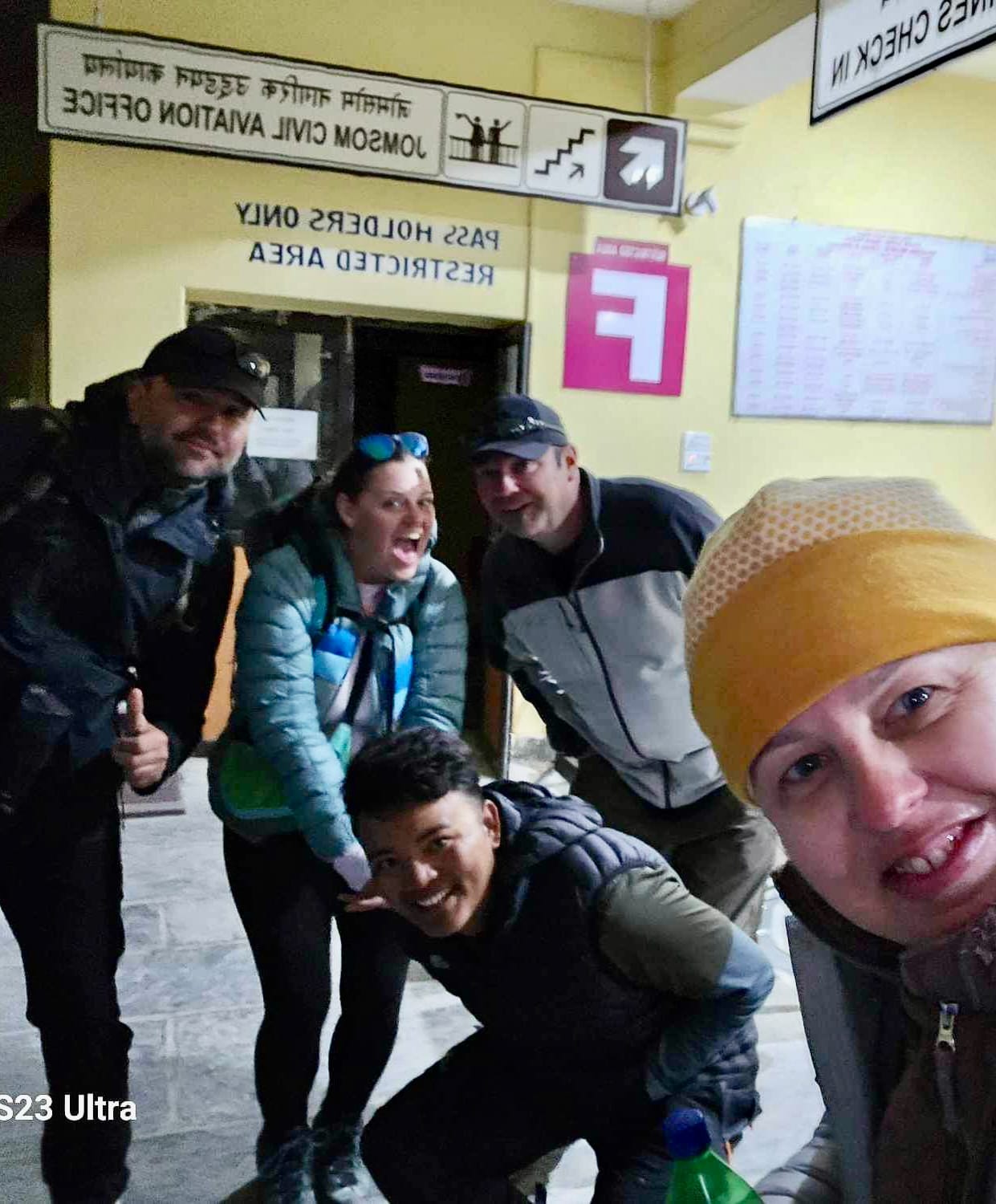
At a crowded teahouse one afternoon, he somehow acquired an old acoustic guitar, possibly from the wall, and handed it to me.
“Play. I know you play.”
I was mortified.
The guitar was terribly out of tune, but with everyone watching and Rumba grinning at me, I managed to strum a few chords before laughing and handing it back.
Naturally, Rumba took it and began playing and singing a Nepali song.
There were so many moments like that.
But as we climbed higher, the mountains became more serious.
The day before we were to cross Thorong La, we began climbing toward High Camp. Snow started falling, something we hadn’t anticipated, making the stone steps increasingly slippery. Somewhere during that climb, I injured my left hip.
By the time we reached camp, the altitude was affecting us. We were exhausted. We had little appetite.
Rumba gathered us together.
He kept ordering tea.
Then he and the porters began singing Nepali songs. Loudly.
They laughed and performed for us, keeping our attention on them instead of how tired we were, how little we wanted to eat, or what waited for us the following morning.
Once again, Rumba was doing what he had been doing since those 365 steps in Kathmandu.
He was watching us.
Only now I understood why.
The next morning, we climbed toward Thorong La.
And we made it.
I cried when I reached the pass.
Those tears were real. The emotion was real. So was the pain in my hip.
Standing there at Thorong La after everything it had taken to reach it remains one of the great moments of my life.
Then we started down.
Apparently the Himalayas had decided we’d had enough dignity for one morning.
I fell squarely on my backside twice, and somewhere there is video evidence of several of us sliding down a snowy section of the mountain on our butts, laughing like children.
Tears at the summit.
Laughter on the way down.
Eventually the snow disappeared beneath our feet and gave way to loose, thin shale.
My hip was hurting badly by then.
I slowed.
The others began moving farther ahead while I carefully worked my way down the mountain.
Rumba stayed with me.
He brought up the rear, slowed his pace to mine and simply talked with me as I picked my way down.
He never made me feel as though I was holding anyone up.
He just stayed.
I’ve thought about that many times.
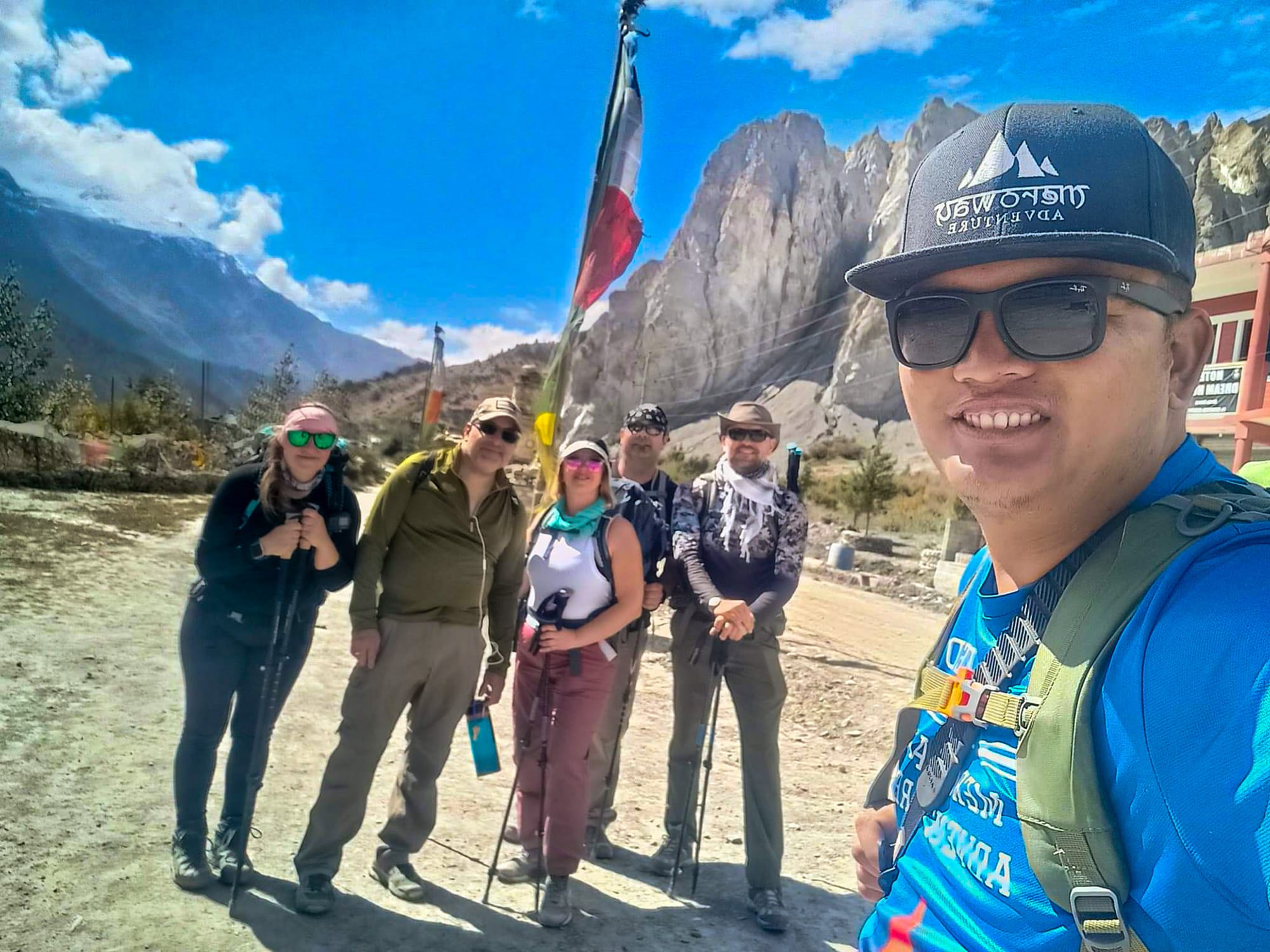
On our first day together, Rumba had watched me climb those 365 steps because he needed to understand my pace.
On the other side of Thorong La, when I could no longer keep everyone else’s pace, he simply changed his to mine.
That was our guide.
That was Rumba.
When the trek was finally behind us and we reached Pokhara, something changed. For the first time, we weren’t simply trekkers following our guide through the mountains.
We could sit together.
After declining our invitations to eat with us throughout the trek, Rumba finally shared a meal with us at a little café overlooking the lake. As if Nepal hadn’t already given us enough stories, we watched a mongoose and cobra battle nearby while we ate.
Rumba continued showing us around Pokhara even though the trek itself was finished.
He took us down into Gupteshwor Mahadev Cave, where water from Devi’s Fall disappears underground. We took ridiculous tourist photographs. We drove high above Pokhara to Pumdikot and stood beneath the enormous Shiva statue as the sun went down over the mountains.
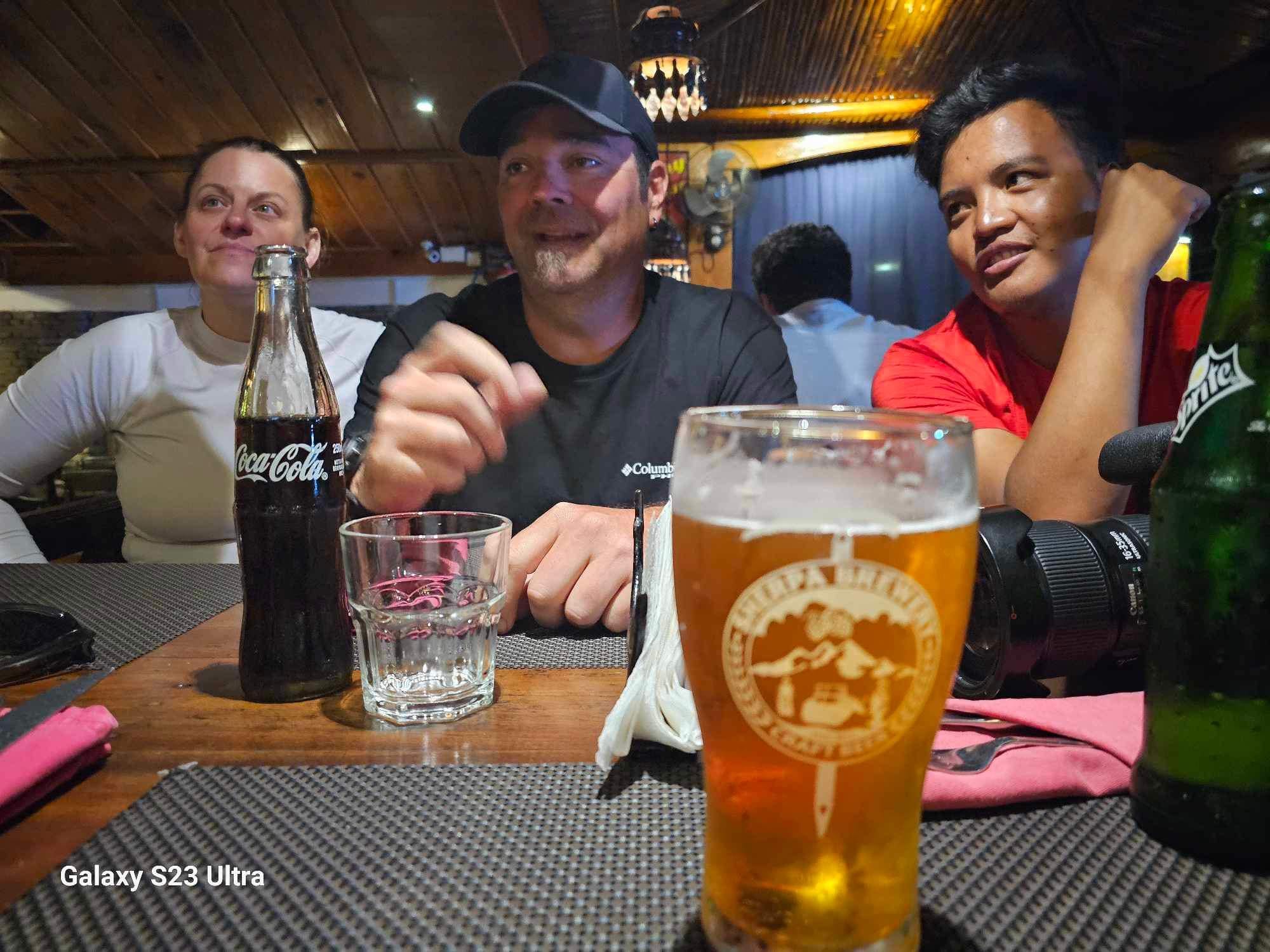
And that night, at Moonlight Café, we ate together again.
This time there was nowhere we needed to walk the next morning.
We talked.
We laughed about the trek.
We shared the memories we had just made together.
And we learned more about Rumba, about his family and about the young man who had spent all those days quietly learning so much about us.
I had arrived in Nepal wondering whether this smiling young guide had enough experience to lead us across the Himalayas.
By the time I left, I understood how completely I had underestimated him.
Rumba wasn’t simply the man who showed us the trail.
He showed us Nepal.
He gave us music in a crowded jeep and stories of the Buddha after dinner. He shared a Himalayan night sky because he remembered that I loved photography. He handed me an out-of-tune guitar because he remembered that I played. He pulled us through a little doorway because there was something from his country he thought we should taste.
He made us laugh.
He watched us.
He challenged us.
He kept our spirits up when the altitude and the mountain were wearing us down.
And when I couldn’t walk as fast as everyone else anymore, he walked slower.
He stayed.
There are people you meet while traveling whom you remember because of the place.
And then there are people who become part of the reason you remember the place at all.
Rumba is one of those people for me.
Nepal is a place where I accomplished something I once wasn’t sure I was capable of doing. I crossed Thorong La. I stood among the Himalayas and cried real tears at what it had taken to get there.
But Nepal gave me something beyond an accomplishment.
It gave me a friend.
A young man with an enormous smile who showed me his country through his eyes. Who shared his music, his stories, his culture and his mountains with us. Who made me laugh. Who challenged me. Who kept me safe. Who knew when to push and when to slow down.
And when I was hurting and falling behind, he stayed with me and walked at my pace
Today, Rumba is missing.
Nepal has been devastated by catastrophic flooding and landslides. Families are waiting for news of the people they love. Search and rescue efforts continue, and as I write this, we are still waiting and hoping for word that Rumba is safe.
It is an extraordinarily helpless feeling to sit thousands of miles away and wait for news about someone who once made sure I got safely down a mountain.
So I am trying to do the one thing I can from here.
I have started a GoFundMe to raise money to support search and rescue efforts and to help the people of Nepal affected by this disaster.
This isn’t simply a place I once visited.
These are people who welcomed me into their country. They fed me, sheltered me, walked beside me and shared their lives with me.
Nepal gave me one of the greatest adventures of my life, and Rumba gave me a Nepal I never could have experienced on my own.
Now his country needs help.
And somewhere in those mountains is a young man with an infectious laugh, a love of photography and American music, a collection of Buddha stories, and a smile I can still see as clearly as I did all those years ago.
We are still waiting for you, Rumba.
We are still looking.
And we are still hoping you come home. ❤️🇳🇵
The Nurse Hiker’s Journey